
Leadership Focus: Why Great Leaders Need to Learn to Say No
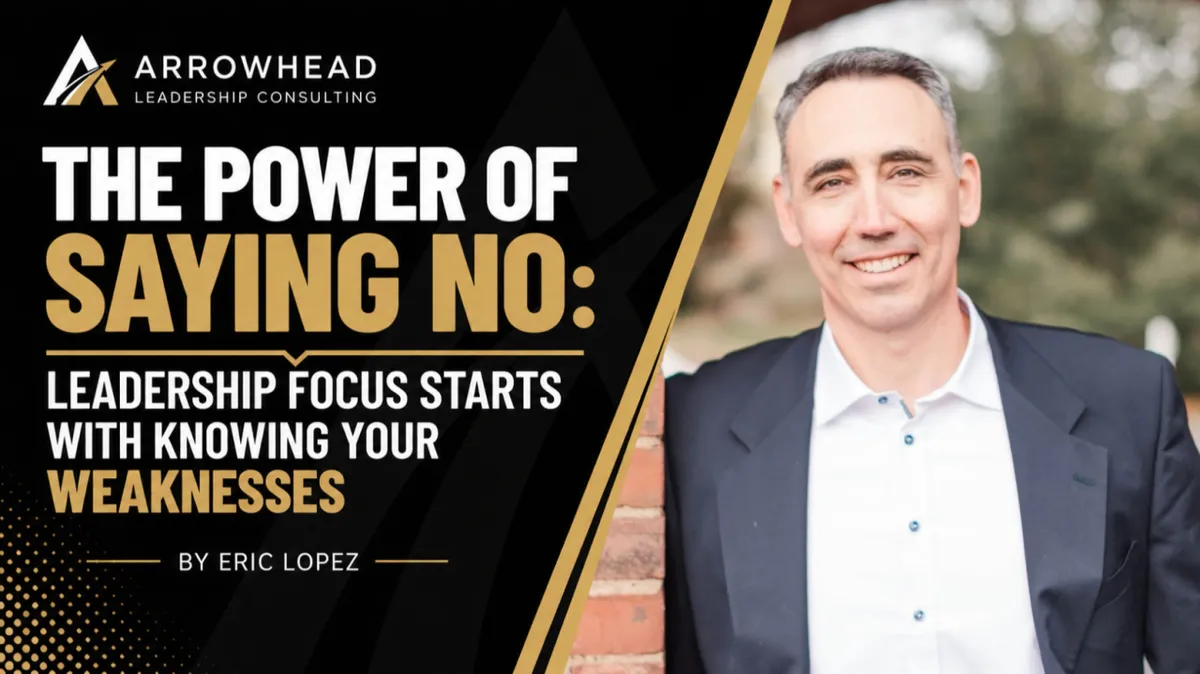
The Power of Saying No: Leadership Focus Starts With Knowing Your Weaknesses
My biggest leadership weakness is saying “No.” I’m just not good at it.
My natural inclination is always to say, “Yes!” This can become a major issue as the leader of a small business because it causes me, and subsequently my business, to stray from the core of what makes us special and profitable. I am guilty of violating the ancient proverb that says, “He who chases two rabbits catches neither.” I am definitely a rabbit-chaser!
This weakness stems from my personality. I am an “I,” or Influencer, on the DISC personality scale. The Influencer’s currency is relationships. We value relationships, enjoy connecting with people, and really don’t like being out of alignment.
We also don’t particularly enjoy rejection. So, when someone comes to me with an idea they are passionate about, I tend to get excited about it as well. Sometimes this works, and sometimes it becomes a distraction that takes my attention away from the priorities I should be focused on.
Understanding that about myself has become an important part of my own leadership self-awareness. I don’t think the answer is to stop being enthusiastic about new ideas or opportunities because that is also part of what I bring to the organization.
The challenge is recognizing when one of your natural strengths starts working against you. For me, that means knowing when my desire to say yes is pulling us away from where we have already decided to go.
Every Leader Needs Someone Who Balances Them
When I was in the Army, I always had an NCO to help me with this affliction. I can still hear, “Sir, we can’t do that,” or, “Sir, we need to stay focused on our priorities.” I truly miss having that “right arm” there to keep me on track.
Luckily, today I have Brittany E. Simmons, our Director of Operations/Finance, who helps keep me focused. Brittany is a “C,” or Conscientious, on the DISC personality scale. She is meticulous, pragmatic, and objective, and she does a great job of making up for some of my weaknesses.
Where I may immediately see the possibilities in an idea, Brittany is more likely to look at what it will take, whether it makes sense, and how it fits with everything else we are already doing.
We complement each other well, and I think that is an important leadership lesson. I don’t need another person exactly like me sitting beside me and getting excited about every rabbit that runs by. I need people around me who bring strengths and perspectives that I don’t naturally have and who are comfortable enough in our relationship to tell me when we need to stay focused.
That is one reason understanding your own leadership strengths and weaknesses matters. Self-awareness is useful, but it becomes much more valuable when you use that knowledge to intentionally build a team of people who complement one another.
Saying No Is Part of Staying Focused
For a small business, this matters even more because there are always more opportunities than resources. There are new ideas, potential partnerships, new services, clients you could pursue, marketing opportunities, and plenty of other things that sound good when someone puts them in front of you.
The problem is that every “yes” comes with a cost. It requires somebody’s time, attention, energy, or money, and often all four. If you keep saying yes without considering what those decisions are doing to your existing priorities, the business eventually starts chasing too many rabbits.
This is where I have had to become more disciplined about leadership focus. An idea can be good and still not be right for us. An opportunity can be exciting and still not fit where we are trying to go. Sometimes saying no has nothing to do with whether something is worthwhile. It simply means we have decided that something else is more important right now.
For someone with my personality, that isn’t always easy, which is exactly why having people around me who think differently is so valuable.
Who Helps You Stay on Track?
As you think about how you lead your business, family, or team, I would encourage you to reflect on three things: What is your biggest weakness? How does your personality contribute to that weakness? And do you have someone who is the yin to your yang and helps buffer the areas where you know you are weak?
The goal isn’t to eliminate every weakness. I’m probably always going to be a little bit of a rabbit-chaser. The goal is to understand yourself well enough to recognize those tendencies and surround yourself with people who make you a better leader.
That also requires enough trust to allow those people to challenge you. Having someone on your team who sees things differently doesn’t help much if they don’t feel comfortable saying, “Eric, this isn’t where we need to be spending our time.”
Some of the best people you can have around you are the ones who know your strengths, understand your weaknesses, and care enough about you and the organization to help you stay focused on what matters.
If you’re leading a team, that’s worth thinking about the next time another rabbit runs by.
Build a Leadership Team That Makes Each Other Better
At Arrowhead Leadership Consulting, we spend a lot of time helping leaders better understand themselves and the people they lead. That kind of self-awareness can change the way a leadership team communicates, makes decisions, handles conflict, and works together.
Do you know if your leadership team is ready for the next stage of growth?
Take the 5-minute Structured Empowerment Assessment to see where your leadership team is strong, where ownership may be breaking down, and what could be keeping too much responsibility at the top.




