
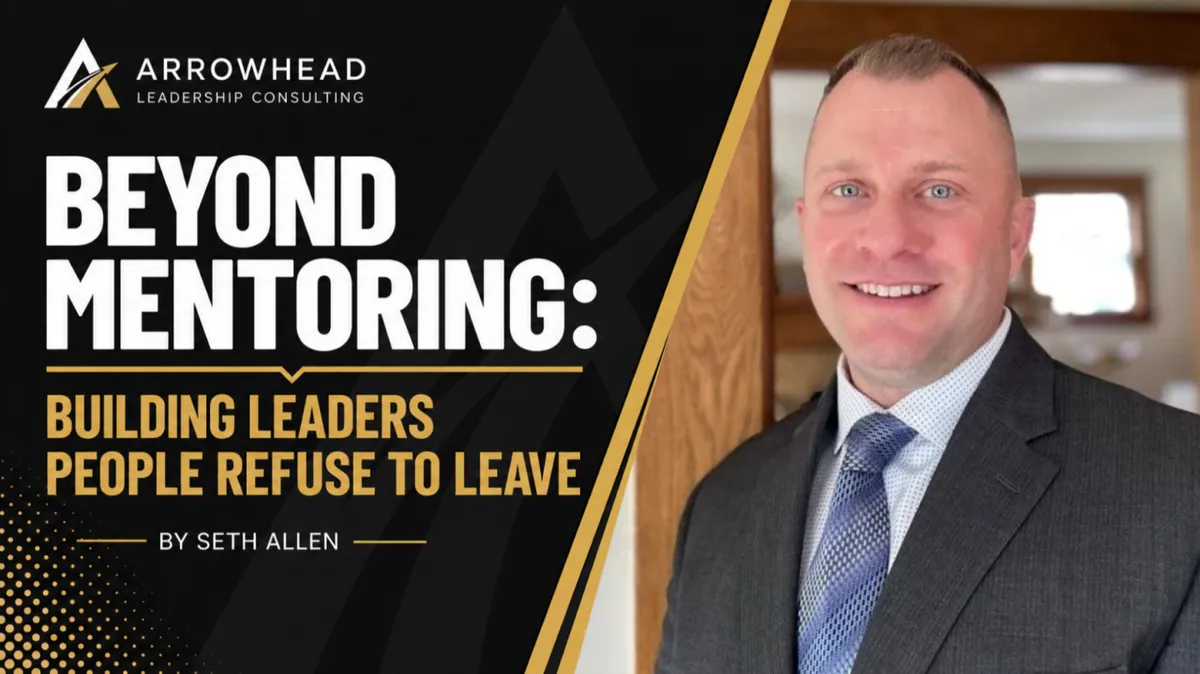
Employee Mentorship and Retention: How Great Leaders Develop People Who Stay
Beyond Mentoring: Building Leaders People Refuse to Leave
Thirty years ago, while serving as an intern, I had the opportunity to connect with someone who was high-ranking in the Secret Service. Looking back, I can see that a foundation was being built that could have eventually led me back to the organization.
The problem was, I had no idea that was happening.
No one explained that I was being mentored. No one told me why the relationship mattered, what I should be learning, or how I could use that experience to prepare for a career with the organization.
So I spent two months as an intern, added another line to my resume, and did something different the next summer. And the summer after that.
Four years later, that same leader found me working as a police officer to gain life experience and asked why I had never applied to become an Agent.
I told him the truth: I didn't feel qualified, and I didn't know what I needed to do to become qualified.
His response was simple: “Why didn't you just call me?”
That was my proverbial palm-to-the-face moment. I was 24 years old. I didn't know what I didn't know.
And that's the problem with mentorship when we assume the person being mentored understands what is happening.
Mentorship Has to Be Intentional
At the time, this individual was a Special Agent in Charge of one of the top divisions at Secret Service Headquarters. I had even met another SAC through a friend from high school.
The relationships were there. The opportunity was there.
But I didn't run with it because I didn't understand what I had in front of me. I didn't spend my college years learning more about the profession or intentionally preparing myself to become an Agent.
I was young and immature, certainly. But I also lacked the continuous guidance that could have helped me understand what was possible and what I needed to do next.
That experience taught me something I've carried into leadership ever since:
Mentorship isn't simply giving someone access to experienced people. It's helping them understand where they could go and how to get there.
And organizations that fail to do that may be losing some of their best future leaders without ever realizing it.
Why Talented Employees Leave
This isn't just a problem for interns or people early in their careers.
Too many employees enter organizations, do their jobs, and never get pulled into what I call “the circle.”
They don't hear the conversations experienced leaders are having. They don't understand how decisions get made. Nobody talks with them about where their career could go, what capabilities they need to develop, or what opportunities might exist inside the organization.
Eventually, they start looking elsewhere. And when they leave for a competitor, we often assume it was about compensation.
Sometimes it is.
But sometimes the other organization isn't simply paying more. They're offering more.
More development. More opportunity. More guidance. More evidence that someone is paying attention to where that employee wants to go.
Organizations spend enormous amounts of time and resources trying to recruit the right people. HR leaders work hard to find candidates with the skills to perform increasingly complex jobs.
But recruiting talent is only half the equation.
What happens after talented people arrive?
If they work for a few years under an overwhelmed manager, receive little meaningful feedback, see no clear development path, and rarely have conversations about their future, why should we be surprised when they leave?
Your Employees Are Asking a Different Question
One mistake leaders make is assuming employees simply want to move into their manager's position.
Often, they don't.
A talented young employee may be asking, “What would it take for me to become the Senior VP of Marketing someday?”
Even the distribution manager may be wondering how today's position can prepare them for something that better fits their long-term goals and abilities.
That's why mentorship must go beyond teaching someone how to do their current job. Great mentors help people understand who they could become.
That requires senior leaders to understand the culture they want to build, where the organization is going, and how they intend to develop the people who will help get it there.
Then they have to start talking with those people.
Start With Better Conversations
Mentorship doesn’t have to begin with an elaborate program. Often, it starts with a leader taking the time to have a meaningful conversation with someone they see potential in.
Imagine saying to an employee, “Kelli, I’m hearing great things from Jon about the internal tracking mechanism you developed for your team. It sounds like it helped increase the storage capacity for our new product. That’s a big win for the company and your team. What made you recognize that as a problem?”
From there, the conversation can naturally move beyond what Kelli accomplished and toward where she wants to go. You might ask what other areas she thinks could be improved, what her career goals are, whether she has considered continuing her education, or simply, “Where can I help?”
Those questions do more than recognize good work. They show Kelli that someone is paying attention to her ideas, her abilities, and her future. She begins to understand that her value to the organization isn’t limited to what she can produce today, and that leaders are willing to invest time in helping her grow.
But the conversation can’t happen once and then disappear. A few weeks or months later, come back to it. Ask what progress she has made, what she has learned, where she is struggling, and what support she needs next. That follow-through turns a good leadership conversation into real mentorship.
Mentorship is not one great conversation or an occasional piece of advice. It is a relationship built over time through continued conversation, encouragement, accountability, coaching, and genuine interest in who someone is capable of becoming.
Bring Your People Into the Circle
This is where mentorship becomes part of organizational culture.
You're not simply giving advice. You're bringing talented people into the circle and helping them better understand the organization, their potential contribution, and the capabilities they'll need for whatever comes next.
Mentors need to understand who their people want to become, the impact they can make on the organization, and where they have opportunities to grow.
That is very different from only telling someone where they screwed up.
One of the most important questions a mentor can ask is:
“What are you doing today to prepare yourself for tomorrow?”
For a young employee, that may become one of the most important conversations of their early career.
And don't assume mentorship only benefits the employee.
If you genuinely listen, you'll learn a lot from the talented people in your organization. You'll discover problems senior leadership doesn't see. You'll hear ideas that haven't made it into the conference room. You'll better understand what motivates your people and what may eventually drive them away.
Most importantly, you'll begin building an organization where talented people can see a future for themselves.
Developing People Is a Leadership Responsibility
The lesson I learned all those years ago wasn't that someone failed to give me an opportunity.
The opportunity was right in front of me.
I simply didn't understand what it could become.
That's what leaders can change for the people they're developing today.
Don't assume your talented employees understand the opportunities around them. Don't assume they know what they need to do next. And don't assume that because they haven't asked for guidance, they don't want it.
Pull them into the circle. Ask about their goals. Help them see what's possible.
Challenge them to prepare for what's next. Then come back and have the conversation again.
Because when people know their leaders are genuinely invested in who they are becoming, you're doing more than mentoring an employee.
You're developing the kind of leaders people want to stay and grow with.
Is your organization intentionally developing its next generation of leaders?
Arrowhead Leadership Retreats give leadership teams the opportunity to step away from the day-to-day, strengthen how they develop their people, and build the clarity, trust, and alignment needed to lead well together.




