
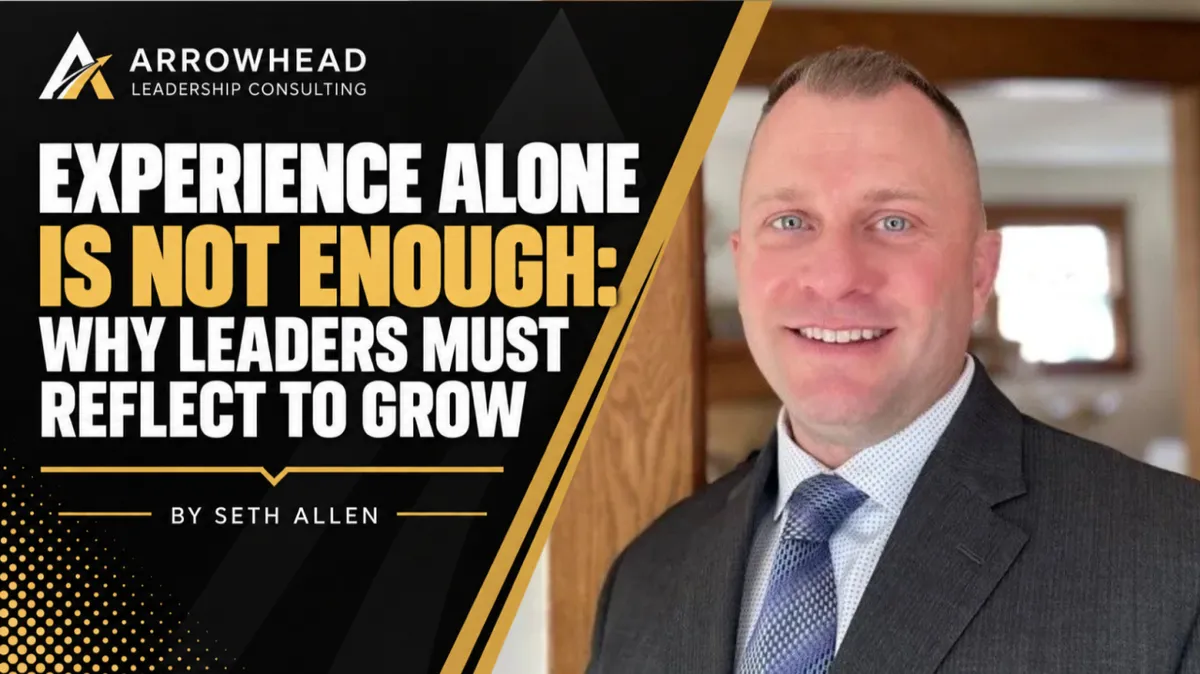
Why Experience Alone Is Not Enough
Experience Alone Is Not Enough: Why Leaders Must Reflect to Grow
During my time at the U.S. Army’s Command and General Staff College, our instructors repeatedly reminded us, “This is your time to reflect and grow as leaders.” At the time, many of us viewed that guidance as just another cliché. Between coursework, assignments, and preparing for future responsibilities, reflection often felt like a luxury we simply could not afford.
Looking back, however, I now understand exactly what they meant.
The year I spent in Leavenworth, Kansas, was one of the few opportunities in my career when I was intentionally given space to think critically about my leadership journey. We were encouraged to examine our decisions, understand our leadership styles, challenge our assumptions, and identify areas for growth. Many of us assumed those opportunities for reflection would always exist later in our careers. The reality was quite the opposite.
As our responsibilities increased, our schedules became fuller, our decisions carried greater consequences, and the time available for meaningful reflection became increasingly scarce. If I could go back, I would spend more time reflecting during that year because there were lessons I had not yet learned and blind spots I had not yet discovered. More importantly, I wish someone had explained why reflection matters so much for leadership growth.
Leadership Reflection Doesn't Always Come Naturally
Reflection is not intuitive for many leaders. Most leaders are action-oriented individuals who have built successful careers by solving problems, taking initiative, and moving forward. Few of us naturally gravitate toward pausing to examine our mistakes, assumptions, or shortcomings. Yet that uncomfortable process is often where some of our greatest growth occurs.
This principle is central to David Kolb’s Experiential Learning Model, which explains learning as a continuous cycle involving four stages: concrete experience, reflective observation, abstract conceptualization, and active experimentation. In simple terms, we have an experience, reflect on what happened, determine what we learned, and then apply those lessons in future situations.
Many leaders excel at the first part: gaining experience. We lead projects, manage teams, solve crises, and make difficult decisions every day. But too many leaders stop there and assume that years of experience automatically translate into leadership growth.
Experience gives us opportunities to learn, but reflection helps us turn those experiences into lessons we can actually use. Without it, we can easily repeat the same behaviors, make the same mistakes, and miss opportunities to improve. Critical reflection is the bridge between experience and growth.
Turning Experience Into Leadership Growth
Over the years, I have made reflection a deliberate part of my own leadership development. I’ve learned to critically examine my decisions, assess my actions, and identify areas where I can improve. That process is not always comfortable. In fact, it often requires acknowledging mistakes, confronting biases, and accepting feedback that may challenge deeply held beliefs.
One lesson I discovered through reflection was that I needed to become more comfortable speaking in front of audiences and responding in real time to unexpected questions and situations. While I have never shied away from leadership responsibilities, I recognized that effective communication and adaptability were areas where I could continue to develop.
As a result, I intentionally sought opportunities that pushed me outside my comfort zone. I accepted invitations to serve as a keynote speaker. I embraced the role of adjunct professor, standing in front of twenty-four college students each week, facilitating discussions, answering unexpected questions, and creating meaningful learning experiences.
Those experiences did not magically make me a better communicator or educator. Improvement came from practicing, reflecting afterward, identifying what I could do better, and applying those lessons the next time. That process mirrors Kolb’s learning cycle. The experience itself was valuable, but the growth came from taking the time to analyze what happened and make adjustments.
Are Leaders Making Time to Reflect?
The question is whether senior leaders are willing to do the same.
Too often, organizations invest heavily in training programs, leadership academies, strategic planning retreats, and professional development while neglecting an important part of the growth process: reflection. Leaders attend conferences, complete certifications, and participate in workshops, yet rarely pause long enough afterward to consider what they actually learned, what the experience revealed about their leadership, what they should do differently, and how they will apply those lessons moving forward.
Leadership development should not be viewed as a checklist of experiences. It should be a deliberate process that combines experience with critical reflection and intentional action. Without that reflection, even valuable development opportunities can become events we attended rather than experiences that changed the way we lead.
Leadership Reflection Shouldn't Stay Private
There is another part of this process that matters. Leaders should not always keep their growth private.
When leaders openly discuss what they are learning, where they are growing, and how they are working to improve, they can create more space for others to do the same. Teams do not expect perfection from their leaders. What they do expect is authenticity, humility, self-awareness, and a genuine commitment to growth.
When leaders are willing to acknowledge where they need to improve and demonstrate that they are doing the work themselves, they make continuous improvement something the entire team can participate in.
We cannot expect our teams to embrace growth if we are unwilling to model it ourselves. Leadership growth begins with the person in the mirror. Before asking others to change, leaders must be willing to challenge themselves, examine their own assumptions, and commit to the sometimes uncomfortable process of self-reflection.
Experience Alone Is Not Enough
Experience, training, and professional development all have value, but none of them automatically make someone a better leader. The leaders who continue to grow throughout their careers are the ones who intentionally take time to examine their experiences, understand what those experiences taught them, and apply those lessons moving forward.
Instead of simply looking back at the experiences we have accumulated throughout our careers, we should be asking what those experiences have taught us and what we are going to do differently because of them.
That is where experience becomes growth.
Is your leadership team ready for the next stage of growth?
Take the FREE 5-minute Structured Empowerment Assessment to see where your leadership team is strong, where ownership may be breaking down, and what could be keeping too much responsibility at the top.




